Cartilage dislocation in the lower back
The Orkuhúsið Medical Center has made an agreement with the Icelandic Health Insurance Company for back surgeries due to cartilage blockage or spinal stenosis. Patients therefore only need to pay according to their status with the Health Insurance Company, as for other surgeries and consultations with specialist doctors.
Information about lumbar disc herniation
Welcome to the operation
This information explains the procedure for a lumbar disc herniation. We want to give you the opportunity to prepare yourself in the best possible way. It is normal to feel some anxiety before surgery, but it can be reduced and your recovery speeded up if you are well informed about the procedure. You are welcome to contact us if you have any questions before your surgery.
Cartilage dislocation in the lower back
It is called a disc herniation when part of the articular cartilage between two vertebrae becomes loose and moves. Symptoms
A disc herniation occurs when pressure from a ruptured articular cartilage causes pressure on the nerves that exit the spinal cord (LSH Quality Manual, 2021).
The operation
The procedure uses a microscope to remove the disc material that is pressing on the nerves.
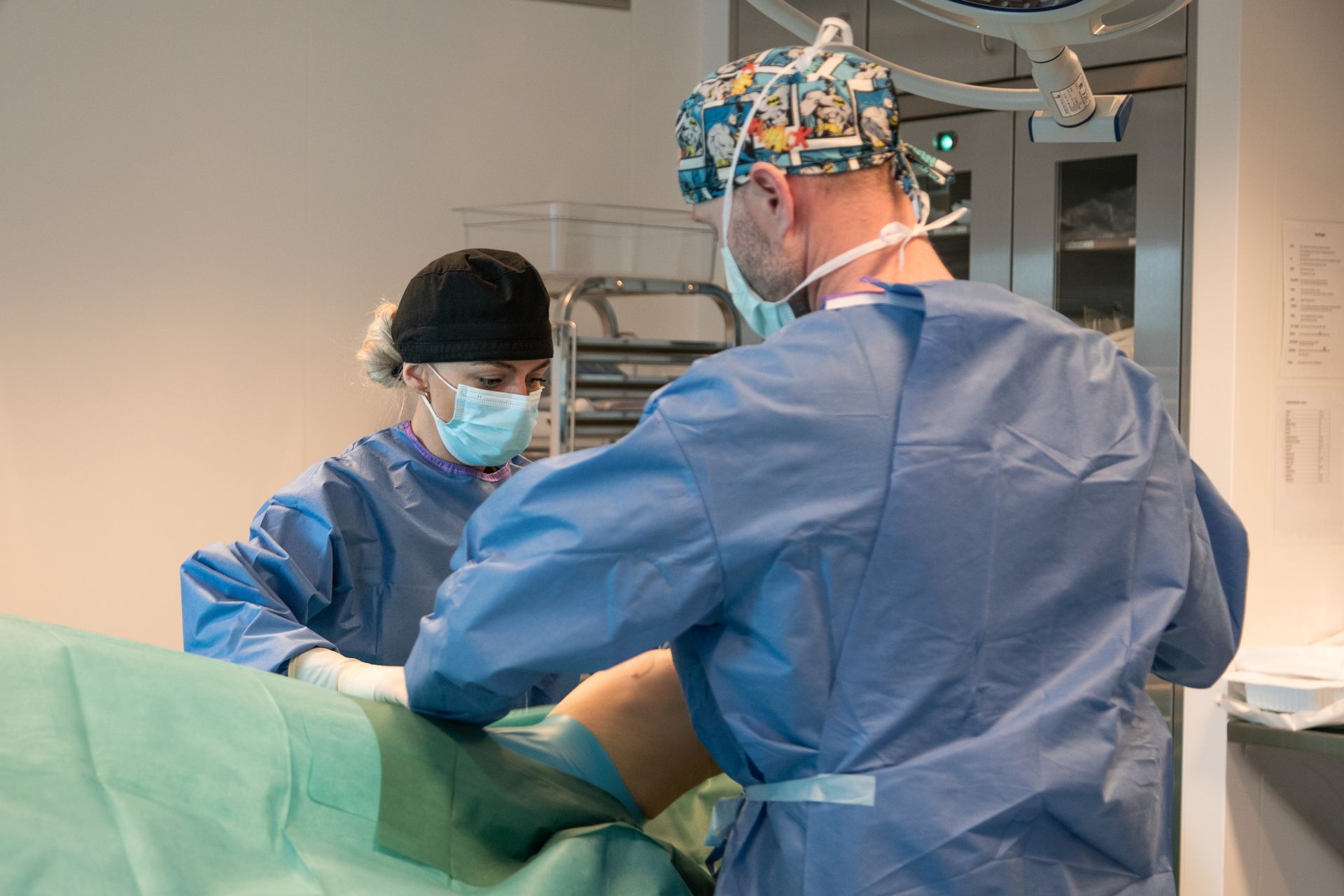
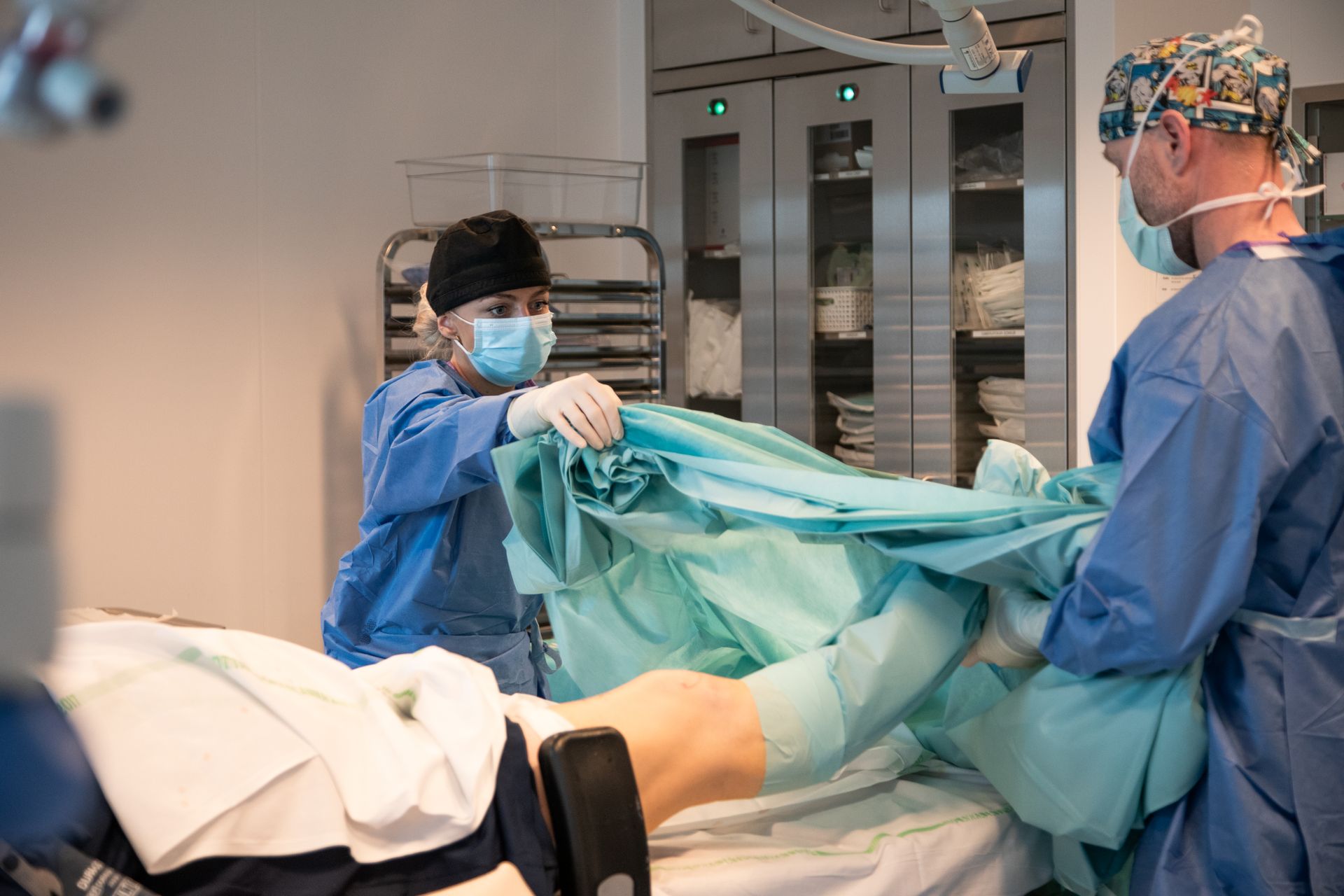
During the operation, you will be under general anesthesia. The staff who are giving you anesthesia will be with you throughout the anesthesia and ensure that you are sleeping soundly and do not feel any pain. A catheter will be inserted into your arm, where you will be given pain medication and anesthesia. You will be placed on an electrocardiogram so that your heart rate can be monitored. A blood pressure monitor will be placed on your upper arm and a finger clip will be placed on your finger to measure your oxygen saturation.
The procedure is performed while you lie on your stomach. An incision of approximately 2-4 cm is made in the lower back. In order to access the disc herniation itself, it is sometimes necessary to remove a small portion of the posterior bony arch of the vertebra. The pinched nerve is gently held to the side and the disc herniation is removed. The wound is then closed.
Before surgery
Shower
It is necessary to shower the night before surgery and before arriving at the Energy House. You must wear clean clothes after the shower and you must not use deodorant, cream, face makeup, perfume, nail polish or jewelry.
Smoking and alcohol
Both smoking and alcohol significantly increase the risk of complications associated with surgery. You should try to quit smoking at least six weeks before surgery and maintain it for six weeks after surgery.
It is also advisable to avoid alcohol four weeks before surgery.
Conversation with an anesthesiologist before surgery
Your anesthesiologist will call you before your surgery to discuss your preparations. If you have had anesthesia before and have had any problems, such as severe pain, nausea, or vomiting, it is important to tell them.
Medicine
Some medications must be stopped before surgery. This is especially true for medications that have a blood-thinning effect.
Your doctor will let you know which medications you should stop taking and how many days before surgery.
Important for surgery
If you experience any of the following symptoms before surgery, the surgery may need to be postponed.
We ask that you contact us immediately at 520-0140.
- Symptoms that may indicate illness or a cold: sore throat, cough, runny nose, difficulty breathing, nausea, loss of taste and smell, muscle and joint pain, fever, or headache.
- Changes in health status and/or changes in medication.
- Sores anywhere on the body
A skin wound can cause an increase in the number of bacteria in the body, increasing the risk of infection during surgery. To decide whether surgery should be postponed, a doctor or nurse will need to examine the wound.
Therefore, please contact us if you develop a wound so that arrangements can be made in time for your planned surgery. Otherwise, a decision to postpone surgery may need to be made on the day of surgery.

Preparation at home
Before surgery, it is a good idea to make arrangements for travel home and return home, and for the first few days at home.
You must plan to be accompanied home, as you are not allowed to drive until the day after anesthesia.
Fasting before surgery
Fasting means abstaining from food and drink. You will receive detailed instructions regarding fasting upon registration.
- Do not eat solid food for the last 6 hours before surgery.
- Do not smoke, use snuff, chew gum, or take throat lozenges after midnight the night before surgery.
- You may drink clear liquids up to 2 hours before surgery. Clear liquids include water, unsweetened fruit juices, tea and coffee without milk.
Solid food
If you are having surgery the next morning, it is recommended to have an evening meal, an extra snack, before going to bed.
and fasting from midnight. Long fasting has negative effects on the body and people usually feel better if
these tips are followed.
Bring with you before surgery
Bring comfortable, loose-fitting clothes that are easy to get into. Bring sturdy shoes to wear.
Mobile phones are allowed, but it is important to show consideration for others at the wake. Leave valuables and money
left at home but keep in mind that you may need to buy medicine on the way home.
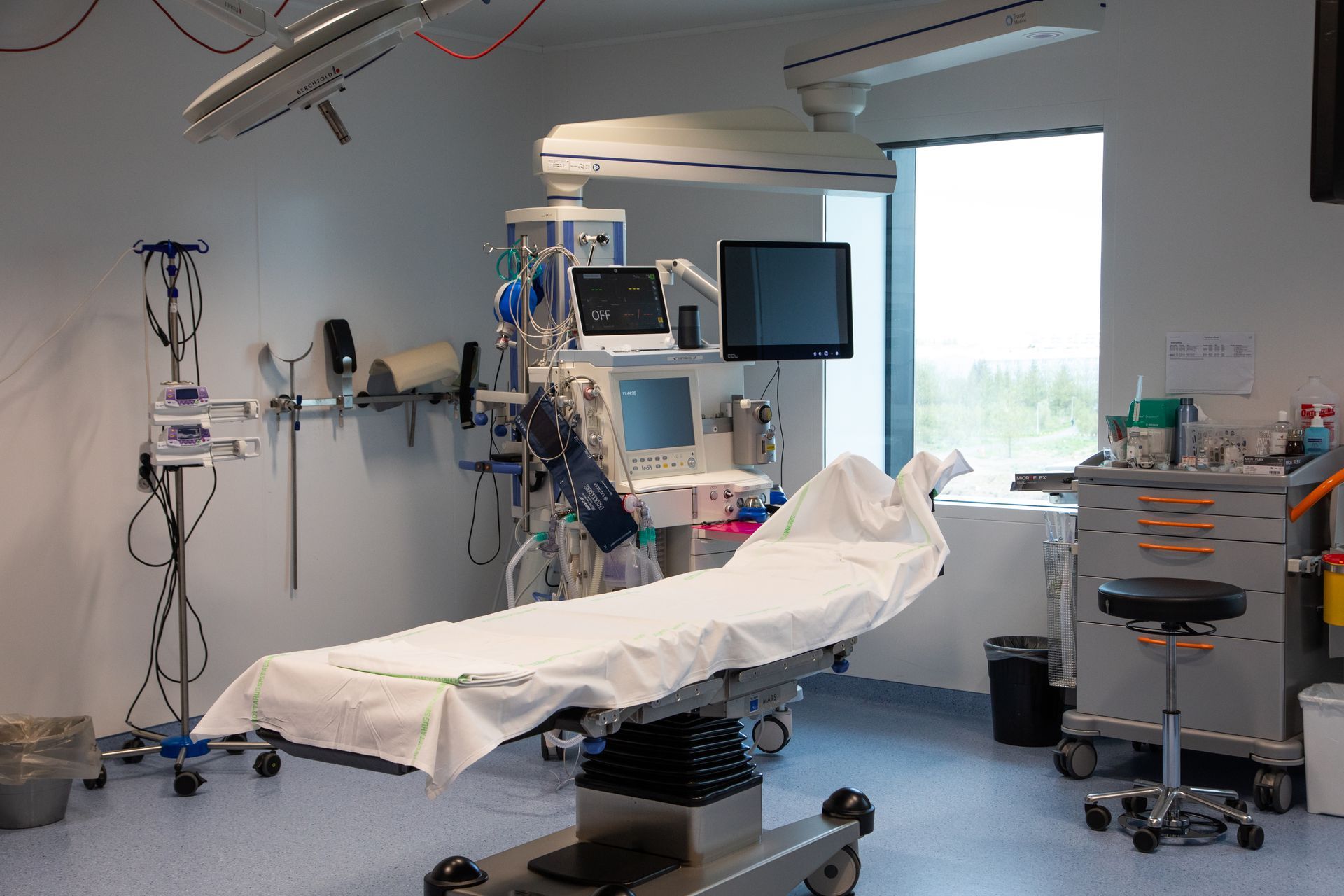
In the operating room
Action day
- Before surgery, you will be changed into hospital clothes and the surgical area will be marked.
- Do not take any medications before surgery unless instructed to do so.
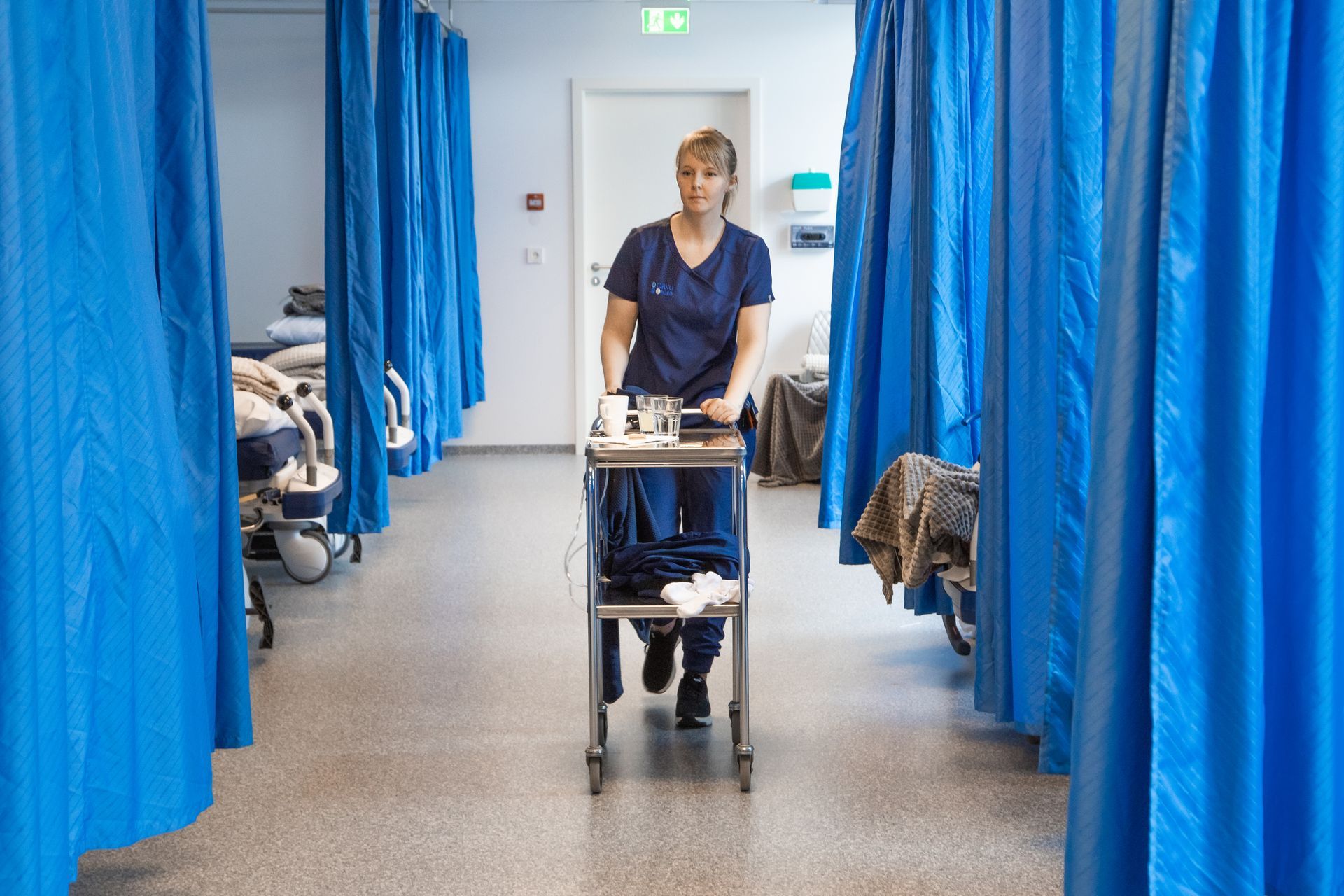
After surgery, you will be in the recovery room. Pain assessments will be performed regularly and pain will be treated as best as possible.
As soon as you feel confident, it's a good idea to start moving around (sitting up, getting dressed, etc.). This reduces the risk of complications such as blood clots.
Homecoming
Patients who undergo surgery at the Medical Center can go home the same day.
Medicine
Electronic prescription painkillers are written by your doctor and can be picked up at any pharmacy. You are responsible for picking them up yourself.
If you are unable to collect your medication after surgery, you can authorize a family member to collect it for you. This can be done through heilsuvera.is.
Pain
Expect to have pain in the surgical area. The muscles in the surgical area are usually stiff at first after surgery, so it is recommended to try to relax your back rather than tense up, as this will increase the pain.
Numbness that occurred before surgery, for example in the foot, can take some time to disappear, and in some cases it does not disappear.
If pain persists, it is advisable to take painkillers regularly throughout the day, every 6–8 hours.
The medication is then gradually tapered off by reducing the dosage or taking the medication less frequently.
It is advisable to take the medication with a glass of water or a meal. Cold compresses can be used on the surgical site to reduce pain for the first 1-2 weeks after surgery.
During this time, it is not recommended to use hot baking sheets as they can cause increased swelling. Cold baking sheets should not be used for longer than 20 minutes at a time (LSH Quality Manual, 2021).
Cuts
The incision is closed with dissolvable stitches. Dermabond is placed over the incision to support the skin.
It is safe to shower 2 days after surgery. It is not recommended to take a bath, swim, or use a hot tub for the first three weeks after surgery.
Movement
Adequate exercise is important after surgery to speed up recovery. Follow your physical therapist's advice on exercise.
Important tips regarding exercise:
- When you turn over in bed, you bend your knees and roll onto your side.
- It is a good idea to have a pillow under your knees when lying on your back and between your legs if lying on your side.
- When getting out of bed, you need to lie on your side and then push yourself up into a sitting position.
- Make sure to keep your back straight when sitting.
- Do not lift heavy objects or do strenuous exercise for the first 4-6 weeks (or as directed by your doctor)
(LSH Quality Manual, 2021)
Possible complications
Every surgery carries a risk of complications. Fortunately, complications are rare, but they can occur even though we do everything we can to avoid them.
Bleeding from a surgical wound
There is a small risk of bleeding from the surgical wound in the first 24 hours after surgery.
Nerve damage
There is a risk of spinal cord injury in approximately 1% of cases. This should not affect the success of the procedure but may delay rehabilitation by 1-2 days.
Cerebrospinal fluid leak
< 1% hætta er á mænuvökvaleka. Þá er best að liggja flatur í 24 klst til að forðast höfuðverk.
Melting
Constipation can be a problem and is caused by less exercise and the use of painkillers. It is therefore important to drink plenty of fluids and eat a high-fiber diet. If necessary, over-the-counter laxatives are available in pharmacies.
Infection
You should seek immediate medical attention if the following symptoms occur in the first two weeks after surgery:
- Fever is higher than 38.5°C
- Pain is persistent and does not decrease with painkillers
- Bleeding or oozing from a surgical wound
- There is redness, swelling, or pus around the incision.
- There is a problem with urination.
- Constant nausea or vomiting
In emergencies, it is recommended to go to an emergency room or call 112.
Other complications
There is a small risk of inflammation of the articular cartilage itself. Very rarely, impaired function in the legs may occur due to spinal cord injury. There is also a risk of urinary retention after surgery.